

We are converting to new fuels
PILLAR 3
New Fuels
Berge Bulk has committed to building and operating a zero-emissions vessel by 2030 and achieving zero emissions fleetwide by 2050. To achieve this, we must replace fossil fuel with new fuels.
As members of the Getting to Zero Coalition and signatories to The Call to Action for Shipping Decarbonisation, we call on governments to work together with the industry to deliver the policies and investments needed to reach critical tipping points in decarbonising global supply chains and the global economy.
Biofuel
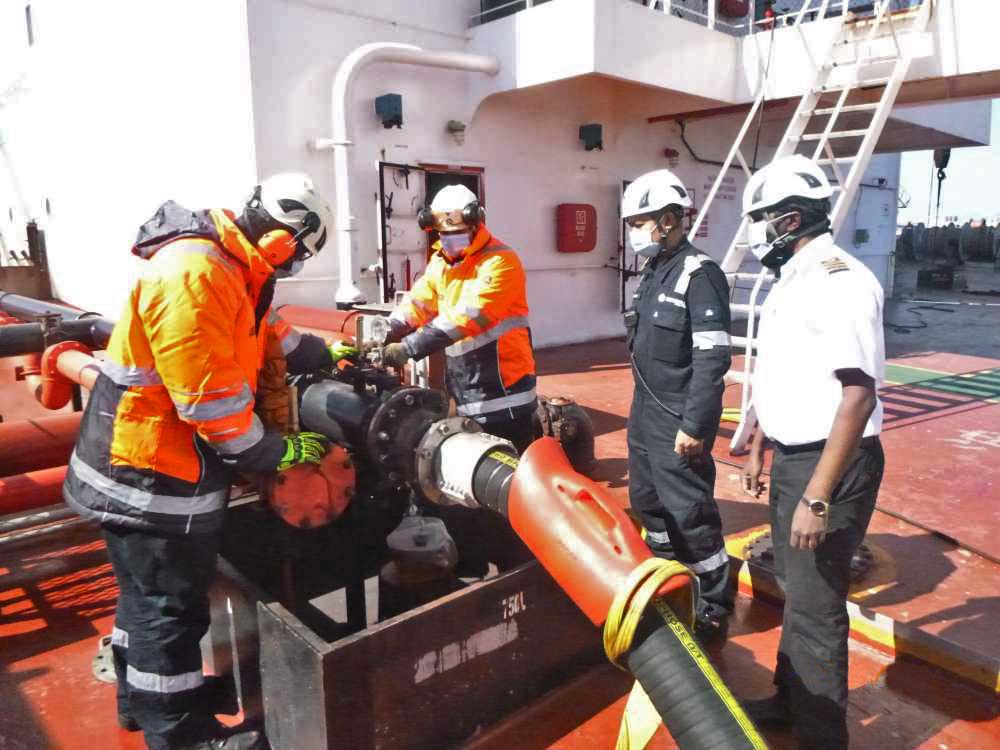
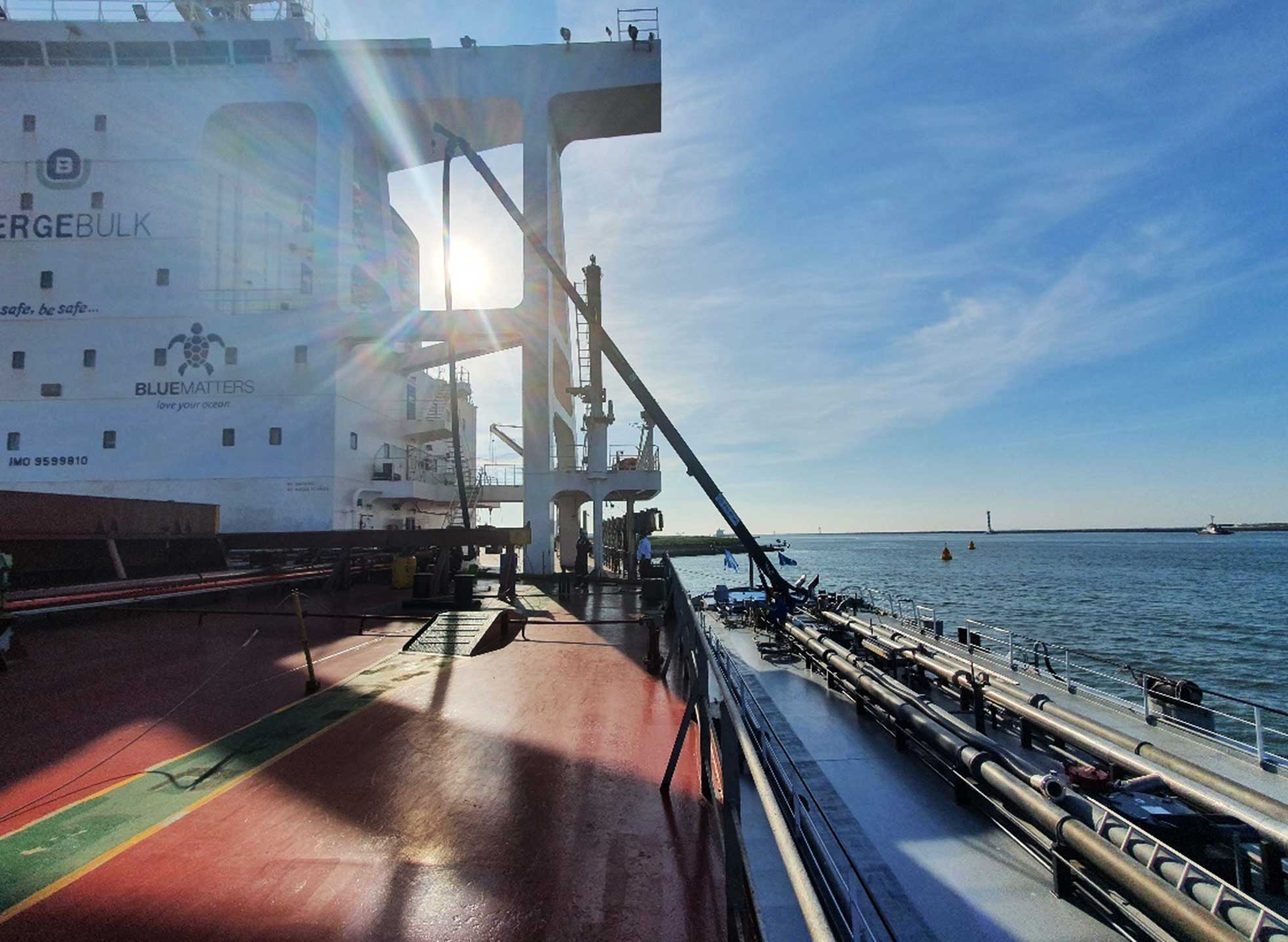
Biofuels are a key enabler in our decarbonisation pathway and an important near-term lever to reduce emissions. As our vessels are mostly powered by engines running on conventional fossil fuels, drop-in biofuels offer a practical solution deployable with existing fleet propulsion technology — bridging today’s realities with tomorrow’s low-carbon shipping landscape.
January 2025 marked a major milestone as the Berge Lyngor — a 206,330dwt Newcastlemax bulk carrier — embarked on its first voyage powered entirely by B100 biodiesel, from Australia to China. This collaboration with global mining firm, BHP, is a significant first — using B100 biodiesel on an iron ore trade route in the Pacific.
Use of B100 biodiesel translates to an almost 84% reduction in well-to-wake greenhouse gas (GHG) emissions compared to the equivalent quantity of conventional fossil fuel oil. It is, therefore, a positive step in the right direction as the industry continues to work together toward scaling a truly zero-carbon fuel.
Whilst we hope to see greater availability and affordability of biofuel in the future, Berge Bulk is committed to continuing conversations with various organisations to find the ideal partner.
Ammonia
Green ammonia is a promising zero carbon fuel for the future of the shipping industry, and Berge Bulk has been actively engaged in discussions with key players in the ammonia supply chain.
Two Ammonia-Ready Vessels Ordered
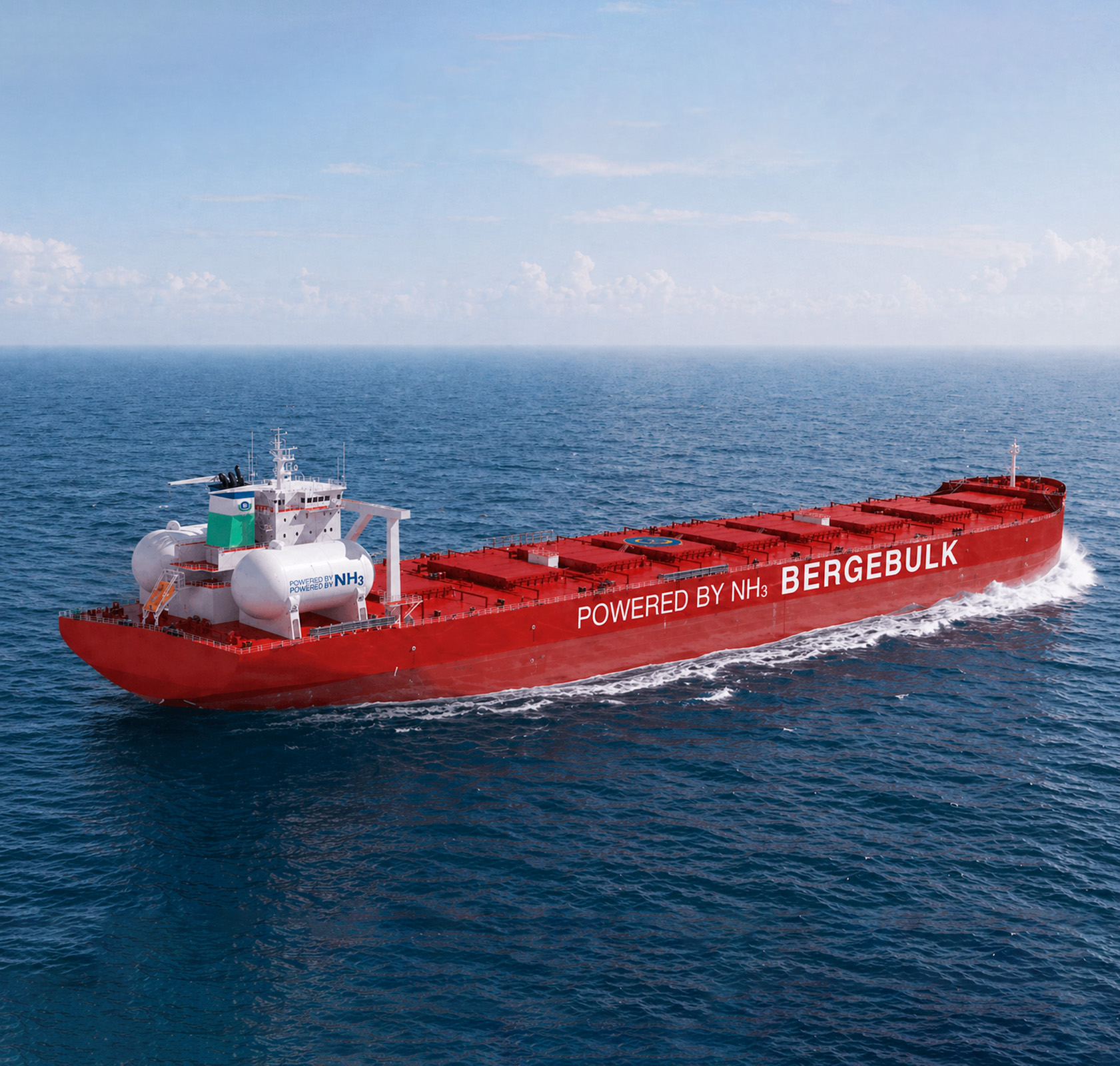
We have ordered two ammonia-ready vessels that will be delivered by 2028. The two 210,000dwt Newcastlemax vessels will meet the International Maritime Organisation’s (IMO) Tier III NOx (nitrogen oxides) standards and Energy Efficiency Design Index (EEDI) Phase 3 compliance for greenhouse gas emissions.
Encouraged by the steady progress being made with the development of ammonia engines and the logistics of ammonia bunkering, we’re proud to play an active role in the transition from today’s hydrocarbon fuels to the ammonia-powered ships of tomorrow.
“We are very pleased to order these ammonia-ready vessels as part of our continued journey towards a zero carbon future. The use of ammonia fuel represents an important milestone in our commitment to operate a zero emissions vessel by 2030 and an essential pillar in our plan to decarbonise.”James Marshall
CEO and Founder, Berge Bulk
Nuclear
Berge Bulk is actively investing in the commercialisation of thorium molten salt reactors (MSRs) — a revolutionary class of clean energy generators for the maritime industry. The potential of MSRs in shipping could play a significant role in meeting the industry’s 2050 decarbonisation targets.
By participating in pioneering projects, we ensure that we stay at the forefront of developments in zero-carbon future fuels as they mature and develop.


