
We leverage the latest advances in maritime technology
PILLAR 2
Technology
High-Tech Retrofits
As emissions reduction technology advances, and new solutions come on the market, Berge Bulk is constantly trialling and evaluating a growing list of innovative fuel-saving solutions that can be retrofitted onto our vessels.
Rigid Wing Sails
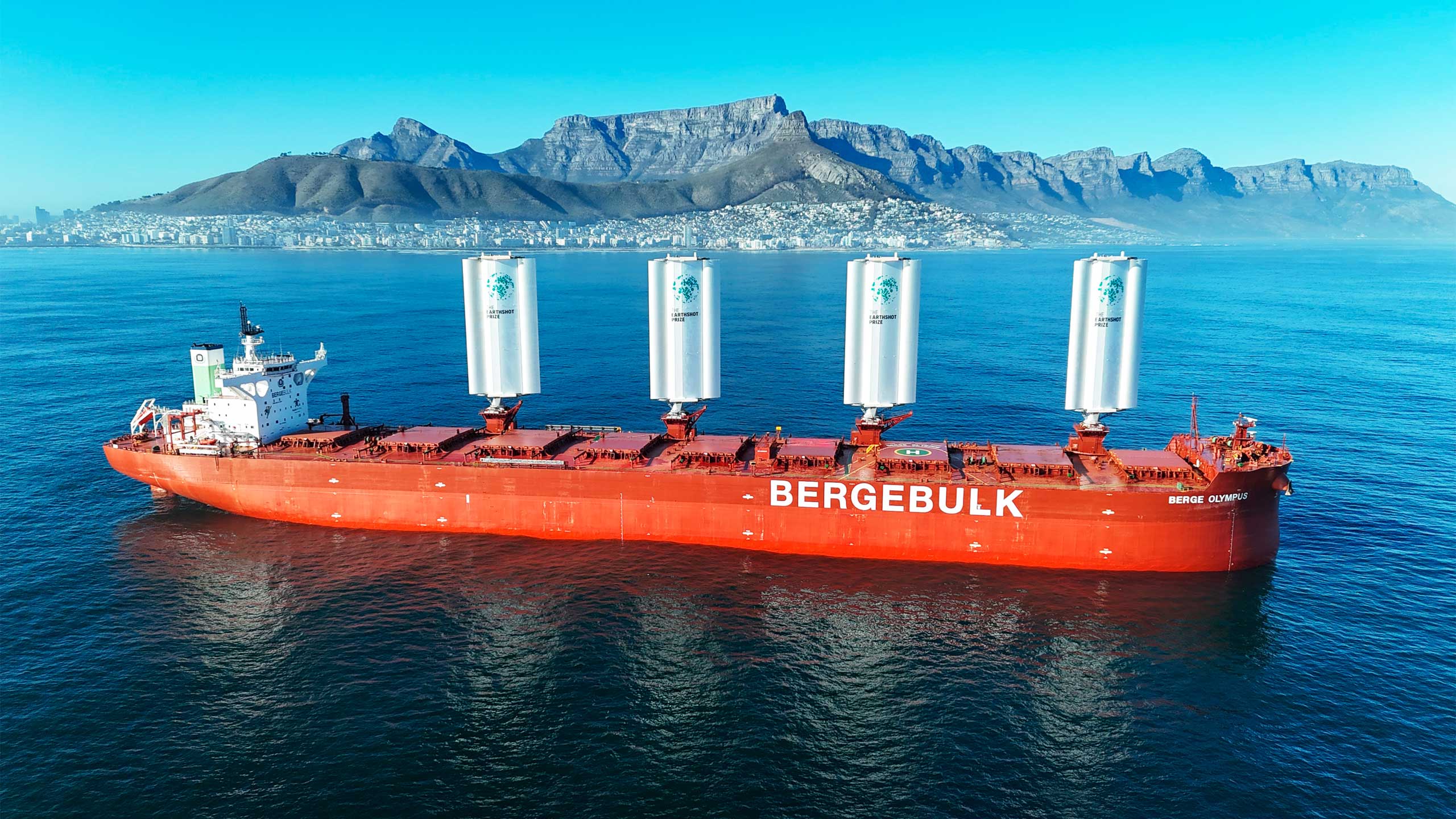
Rigid wing sails, constructed from lightweight and durable composite materials, represent a transformative shift in maritime fuel efficiency. By dynamically adjusting the angles of the front and tail flaps to suit real-time wind conditions, this technology significantly reduces reliance on traditional propulsion.
The Berge Olympus, our 210,000dwt Newcastlemax trading between Brazil and China, serves as a global flagship for this innovation. Equipped with four BAR Technologies WindWings — each standing 37.5m tall — the vessel boasts a total wind capture surface area of 3,000m2. Supported by one of the largest hydraulic systems ever deployed at sea, the sails are capable of enabling over 20 tonnes of fuel savings in a single day.
The wings are operational 85% of the time, with the remaining 15% of non-operational time attributed to navigating high-traffic zones, regulatory restrictions in specific ports, and scheduled maintenance.
By combining wind propulsion with AI-driven route optimisation, we continue to prove that wind is a viable, high-impact energy source for the modern bulk carrier fleet.
Flettner Rotors
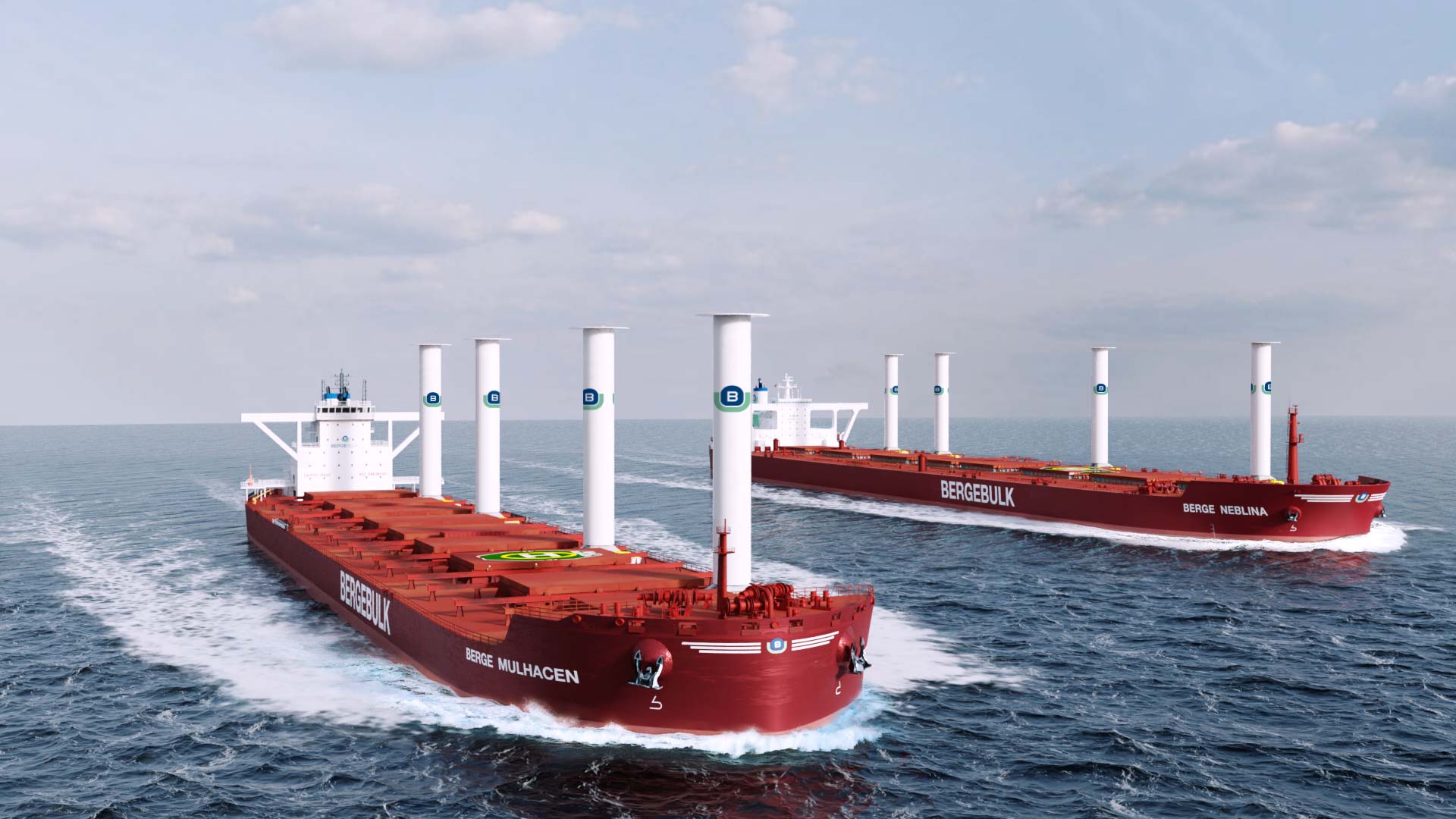
Flettner rotors are vertical high-speed spinning columns that harness the Magnus Effect, to create a pressure differential that generates forward thrust. This aerodynamic “lift”, reduces the mechanical load on the main engine, leading to a significant decrease in fuel consumption and emissions.
We have successfully installed Flettner rotors on two vessels in or fleet, the Berge Neblina and the Berge Meru.
These latest installations feature four 35-metre-high propulsion units, each uniquely engineered with a custom folding deployment system. This allows the rotors to lay flat during port stay, ensuring no impact on air draught or cargo handling efficiency. The Rotor sails are capable of delivering more than 350 tonnes in annual fuel savings.
Solar Panels
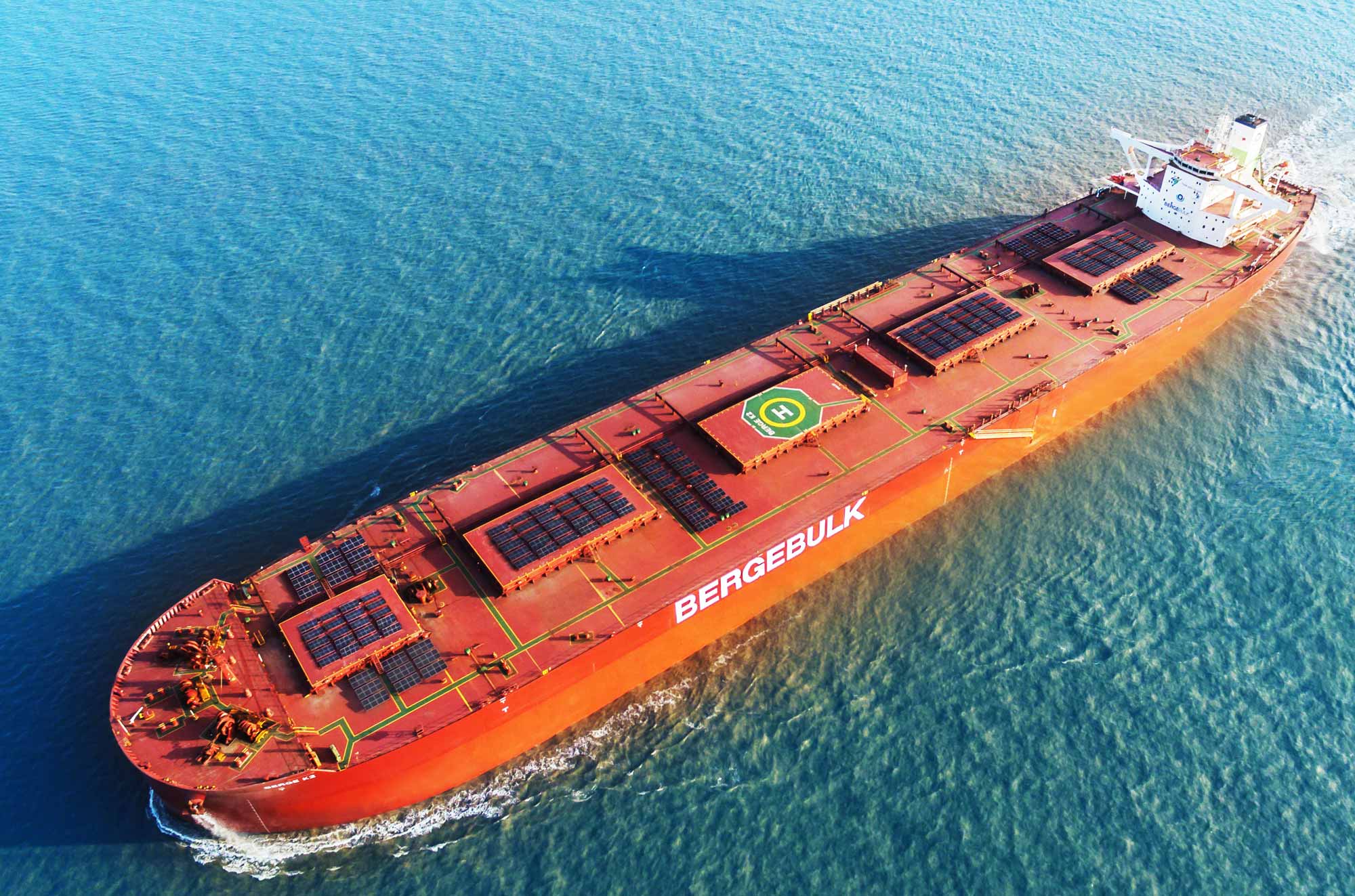
Another area in which Berge Bulk has taken a leadership role as an early adopter is with the maritime application of solar photovoltaic technology. Rather than waiting for off-the-shelf technology to be ready, we are proactively helping the industry to test and learn, by running a series of solar power pilots onboard our ships.
In 2021, we launched a solar pilot onboard our vessel, Berge K2. The initial test installation produced 120kW average of electrical power. In 2022, we launched a second pilot onboard Berge Annapurna with a 417kW peak power generation capacity.
The solar power is fed into the main electrical grid, reducing fuel consumption by the ship’s diesel generators. We continue to observe and assess how the panels withstand the stresses whilst at sea and during in-port cargo operations.
Air Lubrication
Another means to reduce consumption is hull air lubrication. Air lubrication systems essentially provide a bed of air bubbles below the vessel’s hull, which improves speed, reduces friction, and minimises overall fuel consumption. We launched a pilot project for this technology onboard Berge Toubkal in September 2022 and are carefully observing fuel-saving results.
Shaft Generators
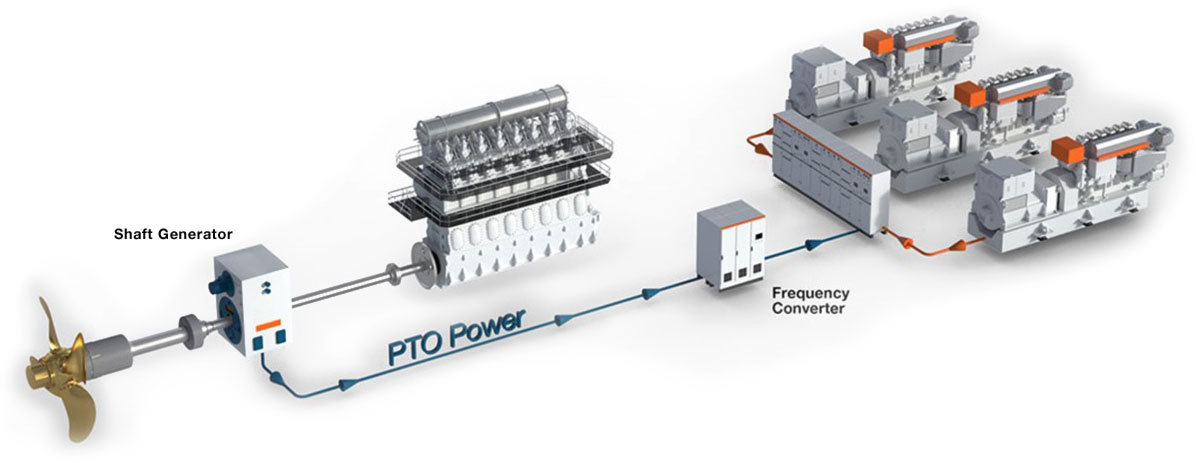
Shaft Generators are a hybrid modification that allows vessels to produce electricity using the main engine. This is more fuel-efficient and requires less maintenance than conventional diesel generators. The additional electrical capacity — relative to the original vessel specification — can also power our other decarbonisation systems, such as air lubrication compressors, Flettner rotors, and hydraulic pumps for rigid wing or rotor sails.
In 2025, we successfully completed the industry’s first installation of a front-end shaft generator on Berge Dachstein, a 208,718dwt Newcastlemax.
Shaft generators are capable of saving at least one tonne of fuel per day. This translates to a reduction of over three tonnes of CO2 emissions per day.
Intelligent Operational Efficiency
We rely on emerging technology solutions to provide meaningful insights that will enable us to operate our vessels more efficiently.
High Tech Fuel Optimisation
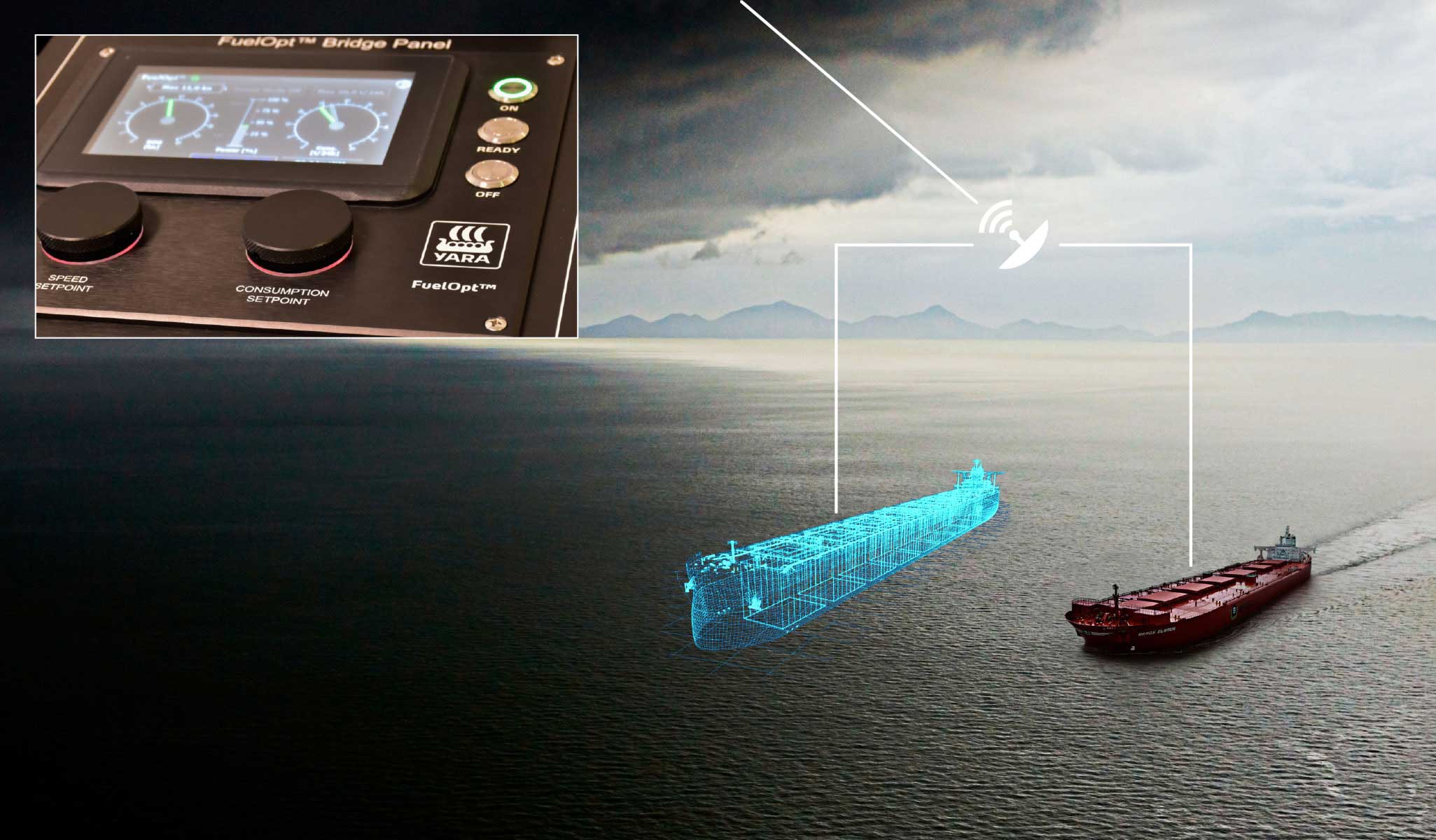
Berge Bulk is piloting a fuel optimisation control system designed to serve as an intelligent “smart cruise control” for our vessels. By integrating directly with engine and propulsion hardware, the system ensures the ship operates at peak efficiency consistently.
The system functions by maintaining a “steady state” of operation, allowing the crew to set fixed targets for either vessel speed or daily fuel consumption. Once engaged, the system makes continuous, real-time micro-adjustments to the engine’s pitch and RPM to account for external variables such as wind, waves, and currents.
This precision prevents the engine from revving unnecessarily — eliminating the fuel wastage associated with manual throttle adjustments. By maintaining these constant conditions, the technology can reduce fuel consumption by 3-4%.